Show You're Grown, Not Your Whole Life: A Calm 2026 Age-Check Guide for UK Adult Fans
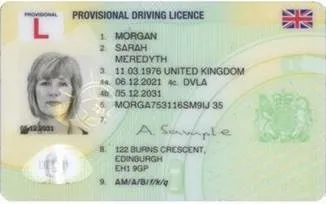
Photo: DVLA, CC BY-SA 3.0, via Wikimedia Commons
There's a particular grimace that appears when a UK adult site asks for age verification. It's half sigh, half side-eye, and it usually comes with the thought: here we go, another site that wants my passport, my face, my inside leg measurement and possibly my mother's maiden name. Fair enough. You're an adult. You shouldn't have to feel like a suspect just to look at a gallery.
But the grown-up question in 2026 isn't 'how do I dodge the check?' It's 'what is this check actually doing with my data?' Age verification is now part of the online landscape in the UK, and pretending otherwise doesn't help anyone. What does help is knowing what a decent check looks like, what a dodgy one smells like, and how to keep your ID and your browsing habits in separate lanes.
The check should be boring
A legitimate age check should feel like a bouncer glancing at your driving licence outside a pub. Quick, limited, a bit dull. It confirms you're 18 or over. That's it. It does not need your full address, your employer, your social handles, a scan of your face held indefinitely, or a detailed history of what you do after you get through the door.
If a site treats age verification as a grand onboarding journey, that's a clue. The more steps, the more data points, the more likely someone is building a profile rather than simply checking a date of birth.
What a fair check asks for
A reasonable UK age check in 2026 might use a passport or driving licence, a certified age-verification provider, a credit card check, mobile network data, or facial age estimation. Different sites use different methods, and that's fine. What matters is the shape of the thing.
It should tell you who is doing the checking before you start. It should explain what data is needed, how long it will be kept, and what happens if the check fails. It should give you a clear yes or no, then get out of the way. Ideally, it issues a one-time pass or token rather than keeping a copy of your ID on file forever.
Data minimisation isn't a buzzword for nerds. It's the difference between a site confirming you're old enough and a site collecting enough to clone your identity. A fair check asks for the minimum. A cheeky one asks for the lot and calls it safety.
What it should never do
A site using 'safety' as an excuse to harvest data will usually overreach. Watch for requests for utility bills, employment details, social media logins, or a selfie holding your passport when a simpler check would do. Watch for ID images stored with no clear deletion date. Watch for consent boxes that are pre-ticked, privacy policies written in fog, and marketing partners mentioned in the small print like an afterthought.
Also watch for the classic dark pattern: make the check confusing, then offer a 'quick alternative' that involves handing over more data than the original method. That's not convenience. That's a funnel.
The three-question test
Before you hand anything over, ask three things.
First: who is doing the checking? If the site won't name the provider or explain the process, that's a red flag. Second: what will they keep? Look for a retention period, a deletion policy, and a clear statement that your ID won't be used for marketing. If the answer is vague, assume the worst and walk. Third: can I keep this separate from the rest of my life? Use a separate email address, a password manager, and a card that isn't linked to everything else you do online. That's not about shame. It's basic hygiene.
Keep your ID and your browsing separate
Here at Ruby Nixxons, we're not anti-verification. We're anti-lazy verification. There's a difference between proving you're an adult and proving you're gullible. A consent-aware adult site should treat age checks the same way it treats everything else: with clear boundaries, minimal data, and no funny business.
That means you should be able to get through the door without creating a public profile in your real name, without linking your social accounts, and without wondering whether your passport scan is sitting on a server somewhere waiting for a breach. If a site demands more than it needs for a free gallery, ask why. If it can't answer, close the tab.
If something feels off
Don't push through the ick. A site that treats you like a suspect before you've even seen a photo is telling you something about how it will treat you later. You can vote with your feet. You can also complain to the Information Commissioner's Office if a site is mishandling your data, but the first move is usually the simplest: leave.
Age checks are here to stay in 2026. They can be done well. They can be quick, proportionate, and private. The good ones don't make you feel exposed. They make you feel grown. And that's the standard worth holding out for.